

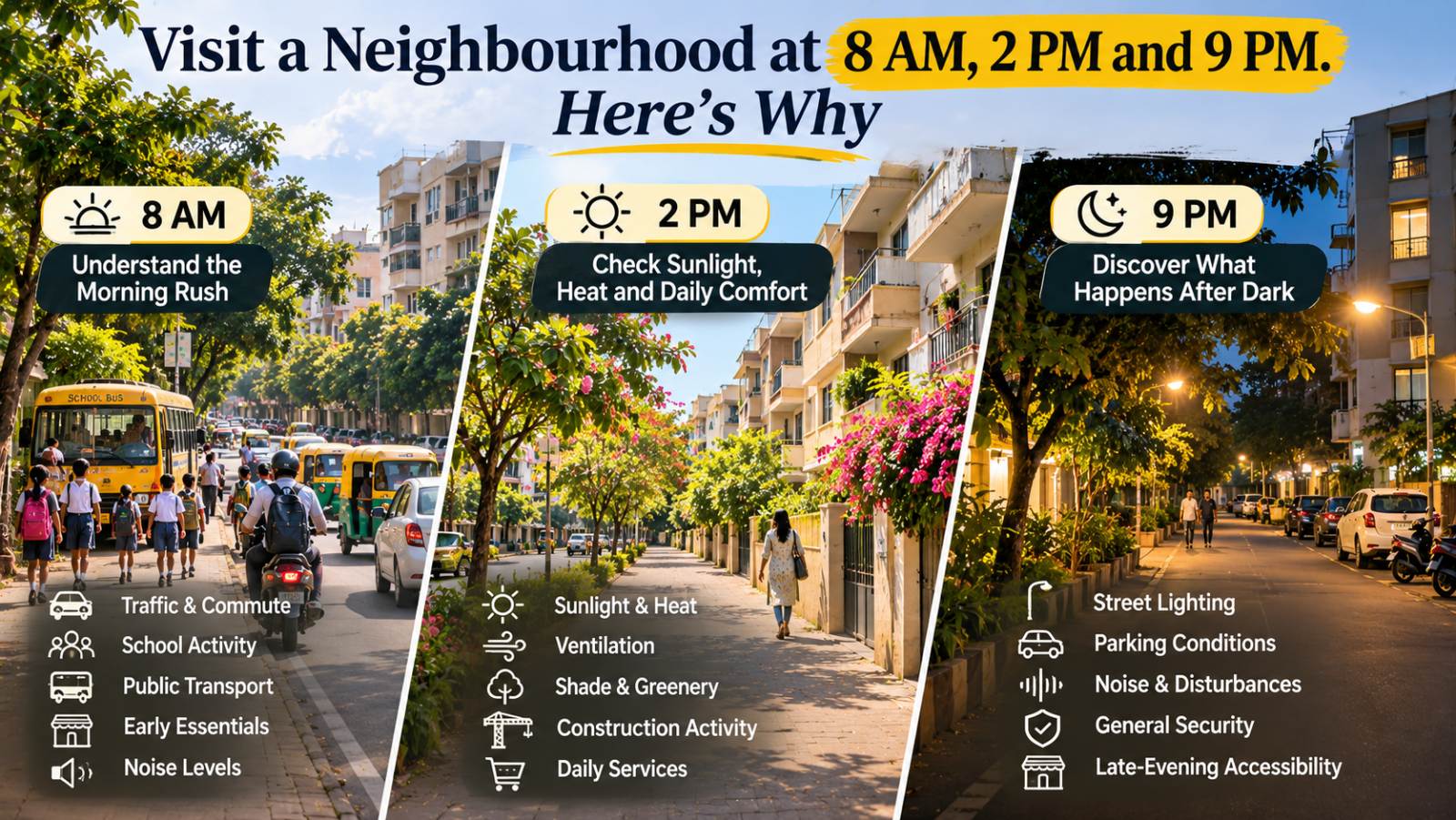
A residential neighbourhood can feel peaceful during an afternoon property visit, but what happens when residents leave for work, children return from school or nearby shops close for the night? The character of a locality changes throughout the day, and a single property visit rarely reveals the complete picture. If you are planning to buy or rent a home, try visiting the neighbourhood at three different times: 8 AM, 2 PM and 9 PM. Each visit can reveal something important about the place you might soon call home.
1. Visit at 8 AM: Understand the Morning Rush
Eight in the morning is when many neighbourhoods begin their busiest hours. Office commuters, school buses, delivery vehicles and pedestrians compete for space on the roads. This is the ideal time to understand how the locality functions when everyone is getting ready for the day. Pay attention to:- Traffic congestion: Check whether vehicles can enter and exit the neighbourhood easily.
- School activity: Notice school bus movement, parking congestion and pedestrian safety.
- Public transport: Observe the availability of buses, autos and other commuting options.
- Street activity: Are grocery shops, bakeries and essential services accessible early in the morning?
- Noise levels: Listen for traffic horns, construction work and other recurring disturbances.
2. Visit at 2 PM: Check Sunlight, Heat and Everyday Convenience
Two in the afternoon offers a different perspective. Morning traffic may have disappeared, but this is a useful time to understand the neighbourhood's daytime environment. Start by observing how much direct sunlight reaches the property and its surroundings. If you are viewing an apartment, check the direction of the windows and balconies, natural light inside the rooms and how much heat enters the living spaces. In warmer Indian cities, afternoon heat can affect indoor comfort and potentially increase dependence on air conditioning. Also consider:- Ventilation: Does the property receive adequate airflow?
- Shade: Are there trees or shaded walking routes nearby?
- Construction activity: Are nearby construction sites creating dust or noise?
- Daily services: Are pharmacies, grocery stores and other essential establishments operating during the afternoon?
- Pedestrian comfort: Are footpaths usable in the heat, or does walking become uncomfortable?
3. Visit at 9 PM: Discover What Happens After Dark
Nine in the evening can reveal aspects of a neighbourhood that daytime visits often miss. This is particularly important if you regularly return home late from work or expect family members to travel after sunset. Observe the following:- Street lighting: Are residential roads, pedestrian paths and building entrances adequately illuminated?
- Neighbourhood activity: Are local shops and essential services still accessible?
- Parking conditions: Are vehicles occupying footpaths or blocking narrow roads?
- Noise: Can you hear traffic, loud music, nearby restaurants or other disturbances?
- Accessibility: Is it reasonably easy to find public transport or a taxi?
- General security: Are building entrances monitored, and are common areas maintained?
4. Compare What Changes Throughout the Day
The real value of visiting at different times is comparing what changes. A quiet residential road at 2 PM might become heavily congested at 8 AM. A grocery store that appears convenient during the day might close before you return from work. A property with attractive interiors might receive considerable afternoon heat. Keep a few observations from each visit:- At 8 AM: Note traffic, school activity, commuting options and morning noise.
- At 2 PM: Observe sunlight, ventilation, construction activity and walking conditions.
- At 9 PM: Check street lighting, parking, noise, transport availability and neighbourhood activity.
5. Speak to People Who Already Live There
Your three visits can reveal visible problems, but residents can help you understand recurring issues. Ask a few straightforward questions:- Does the road become congested every morning?
- Are there frequent power or water supply interruptions?
- Is there considerable noise at night?
- Does the area experience waterlogging during the monsoon?
- Are essential shops and transport services accessible throughout the day?


No comments
Log in or create a free account to join the conversation.